Built by a practitioner.
For practitioners.
This framework was built from my 20+ years of leading IT & BI functions, navigating the complexity of building technically strong teams that actually move the business forward.
I am Hariprasad Ramamoorthy, a BI Director, Technical Program Manager, and Product Manager with experience across SaaS, technology, and enterprise organizations in India, United States, and Canada. Every principle in this framework reflects something I have built, seen fail, or had to fix at professional cost.
The framework exists because I needed something like it for my own leadership, role maturity and execution.
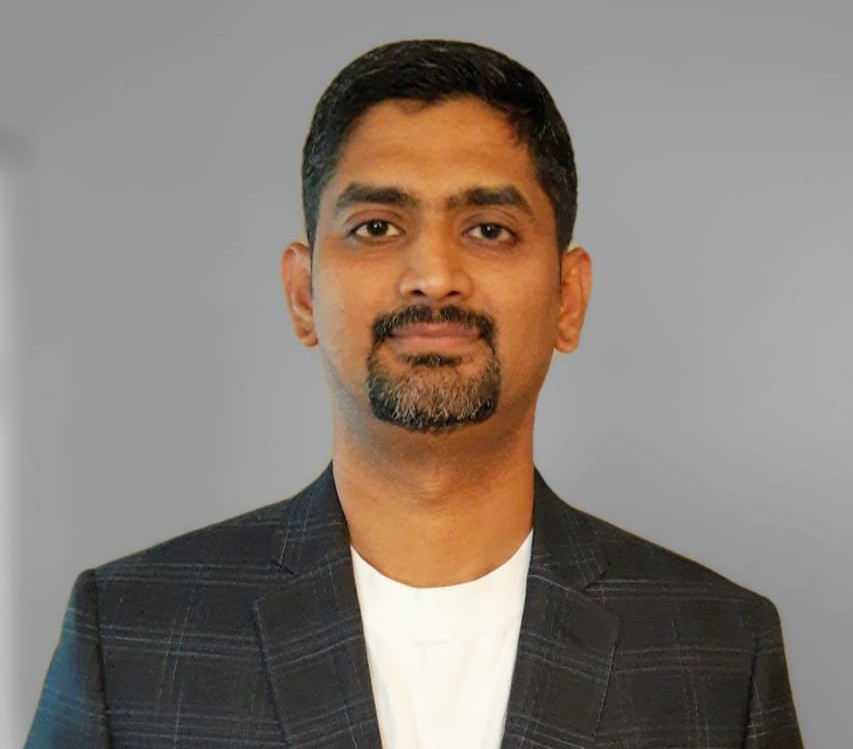
20+ years leading IT & BI at scale
From hands-on technical delivery to Director-level program leadership — across SaaS, enterprise technology, government, and professional services in India, Canada and the USA.
I hold a Master of Science in Business Analytics from Georgia Tech, a Bachelor of Engineering in Computer Science, and hold PMP®, PMI-ACP®, PSM I, and PSPO I certifications. I am also a Lean Six Sigma Green Belt.
I have personally hired, trained, led and mentored globally distributed technical teams and delivered several IT products and Data solutions to both internal and external clients.
Technical Product Manager
Streamlined product governance, prioritization frameworks, end-to-end communication, cross-functional collaboration, customer feedback loops, and drove operational and business value through on-time delivery and commitment.
Director of Business Intelligence
Built and led an 11-member global BI team with a $1.2M operating budget, serving 7 divisions including Finance, RevOps, Digital Marketing, and Corporate Leadership. Analytics solutions my BI team delivered help internal clients reduce task delays by 95%, achieve 100% campaign budget-spend alignment, 12% reduction in CAC, and the best practics I implemented saved $45K/year in GCP costs.
Project Manager, Application Innovation
Led a significant data center migration project and migrated from a 25+ year old data center to latest infrastructure with zero P0/P1 incidents. Managed a $1M Azure Stack migration/deployment for one of the clients in Saskatchewan.
Technical Program Manager
Delivered 8+ BI programs and 15+ projects during my 10.5-year tenure across CSS, Sales & Marketing, Finance, LCA, and HR for the client Microsoft Corporation. Led several windows/web projects, sustenance and enhancement projects, data engineering, warehousing, ETL, reporting & analytics and end-to-end BI projects and programs.
How I lead — and what the framework reflects
The framework is a direct expression of my leadership beliefs. These are not abstract principles — they are the practices I have built, tested, and refined across every team I have led.
The leader's job is to remove obstacles, develop people, and create the conditions for the team to do great work. Not to direct from above but to serve from being a part of the team.
I conduct one-on-ones with every member (direct/indirect) of my team every week. I always start the meeting with asking for feedback on my own performance before I give any feedback on theirs. If the leader is not modeling the behavior they expect, they have no right to expect it.
A BI team that does not understand how the business makes money is limited to order-taking and will always be considered as a cost center. Seeing how someone's job (their department/team) connects to their organization's goals is one of the most important leadership investments.
When I (or my team members) meet with the stakeholders, my primary goal would be to understand what problem are they facing and trying to solve? The difference between building what was asked vs knowing the business problem and delivering the need/real outcome is the difference between a "job shop" team and a trusted advisor.
As a leader, my top-most priority would be to give clarity to my team on what is the business priority, how to deliver it, and to shield the team from unexpected changes and ad-hoc needs. A team with no structure is permanently at the mercy of the loudest voice. I would ensure that my team is well-structured, self-organized and highly capable in Product Management best practices.
The shift from individual contributor to leader is one of the hardest transitions in a career — and the least supported. Developing the next generation of BI leaders is the highest-leverage investment a leader can make. I make every best effort to identiy leaders among my team during the early stages, mentor them and promote them. I would ensure that they are provided with the best environment to grow.
Want to learn more about the framework?
See how the six principles were designed and how the 360-degree assessment works in practice.